

10k In 30 Days: Effective Savings Plan for Financial Success

Saving money can feel difficult when monthly expenses keep increasing and unexpected costs disturb your budget. However, saving 10,000 in just 30 days can become achievable with a clear plan, consistent habits, and better spending decisions. Whether you want to build an emergency fund, prepare for a major purchase, pay upcoming bills, or improve your financial stability, a structured savings strategy can help you make meaningful progress.
The key is not necessarily earning more money. It is learning how to manage the money you already have, identify unnecessary expenses, and set realistic daily savings targets. With the right approach, you can turn a challenging financial goal into a manageable 30-day activity.
This guide explains how to save 10k in 30 days, create a practical budget, reduce everyday expenses, track your progress, and build habits that support long-term financial success.
What Does Saving 10k in 30 Days Mean?
Saving 10k in 30 days means setting aside 10,000 units of your currency within one month. Your exact strategy will depend on your income, household expenses, debt obligations, and existing financial responsibilities.
For example, if your goal is to save 10,000 in your local currency, you can divide the target into smaller amounts instead of trying to save everything at once.
Here is a simple breakdown:
- Monthly savings goal: 10,000
- Daily average: Approximately 333.33
- Weekly average: Approximately 2,333.33
- 30-day target: 10,000
These figures provide a starting point rather than a strict daily requirement. You can save smaller amounts on busy days and larger amounts when you receive income or spend less than expected.
The most important step is to choose a target that fits your financial circumstances. A successful savings plan should help you become more financially secure without preventing you from paying essential bills or meeting necessary obligations.
1. Start With a Clear Financial Goal
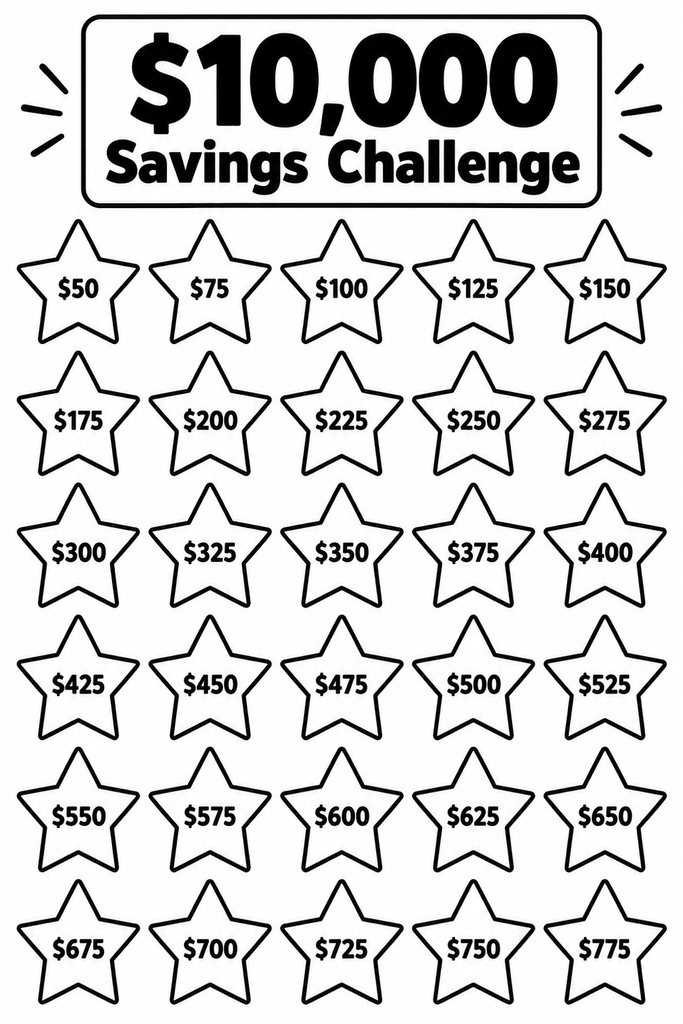
Before you begin saving, decide why you want to accumulate 10,000 within 30 days. A specific purpose makes it easier to stay motivated and avoid unnecessary purchases.
Your goal might be to establish an emergency fund, purchase an essential household item, cover education expenses, prepare for travel, or create a financial cushion for unexpected bills.
Write down your goal and keep it somewhere visible. You can also create a simple savings tracker that shows how much you have saved and how much remains.
For example, if you have already saved 2,500, your remaining target is 7,500. Breaking the goal into smaller milestones makes your progress easier to understand.
Consider setting three checkpoints:
- Day 10: Save approximately 3,333.
- Day 20: Reach approximately 6,667.
- Day 30: Complete the 10,000 target.
These milestones help you identify problems early. If you fall behind, you can review your expenses and adjust your plan instead of abandoning your goal.
2. Analyze Your Monthly Income and Expenses
One of the most effective ways to save money is to understand exactly where it goes. Many people underestimate small purchases because individual transactions appear inexpensive. However, frequent spending can gradually consume a significant portion of their income.
Start by listing your monthly income from employment, freelance work, business activities, or other reliable sources.
Next, divide your expenses into three categories.
Essential Expenses
These are necessary costs that support your everyday life. Examples include rent, groceries, electricity, transportation, healthcare, education, and minimum required debt payments.
Flexible Expenses
These costs can change depending on your choices. Examples include restaurant meals, entertainment, shopping, subscriptions, and nonessential travel.
Savings and Financial Goals
This category includes money reserved for your 10k target, emergency savings, and other financial priorities.
Review your recent bank statements, digital wallet transactions, receipts, or spending records. Identify expenses that can be reduced without affecting your health, safety, or essential responsibilities.
For instance, reducing unnecessary purchases by 100 per day could free up 3,000 over 30 days. That amount alone would cover a meaningful portion of your savings target.
3. Create a Realistic 30-Day Savings Budget
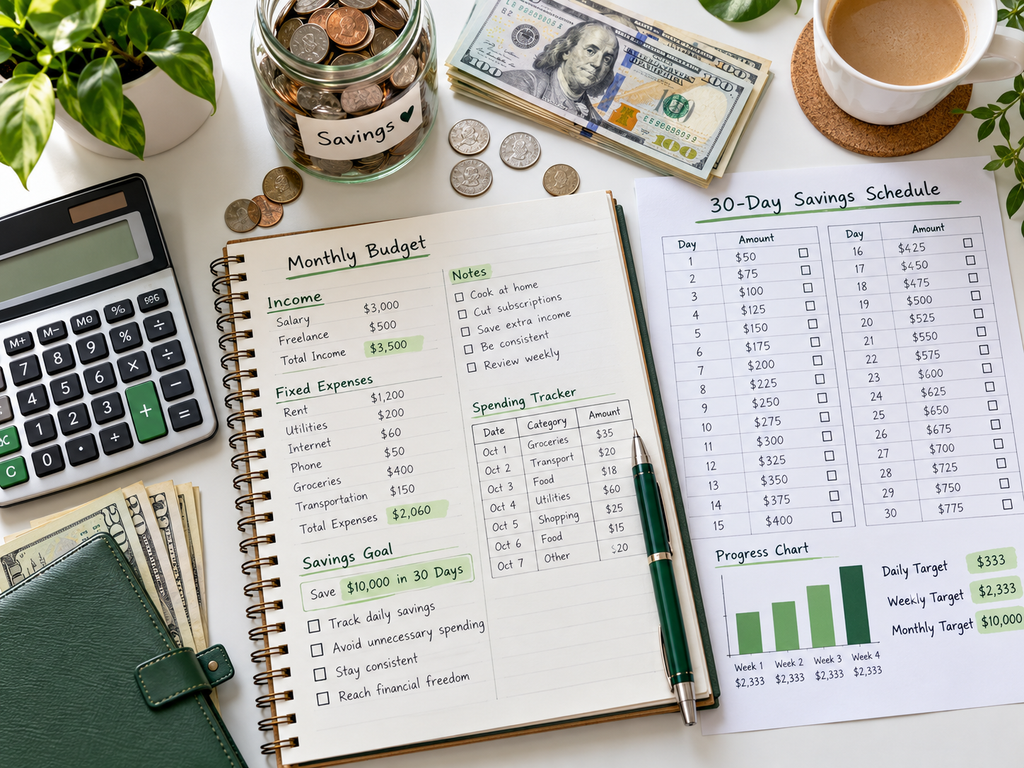
A savings budget gives every part of your income a purpose. Instead of waiting until the end of the month to see what remains, you decide in advance how much money should go toward essential expenses and savings.
Calculate your available income after accounting for necessary costs. Then determine whether saving 10,000 is realistic within the next 30 days.
If your income is sufficient, set aside the target early. If your income is limited, consider a combination of spending reductions, temporary additional income, and a longer savings period.
The following example shows how reducing flexible expenses can help.
| Expense category | Monthly amount |
|---|---|
| Essential household expenses | 25,000 |
| Transportation | 5,000 |
| Eating out and entertainment | 4,000 |
| Shopping and miscellaneous purchases | 3,000 |
| Available savings allocation | 10,000 |
| Total planned allocation | 47,000 |
This example assumes that monthly income covers all listed allocations. Your actual budget should reflect your own income, local prices, family responsibilities, and existing financial commitments.
Avoid copying a budget that does not match your situation. The purpose is to build a practical plan, not to follow arbitrary spending limits.
4. Follow a Daily Savings Strategy
A daily savings strategy makes a monthly goal easier to manage. Instead of thinking about the full 10,000, focus on smaller contributions that gradually accumulate.
You can use one of three approaches.
Fixed Daily Savings
Set aside approximately 333.33 every day. This method works well when your income and daily expenses are relatively predictable.
Weekly Savings
Save approximately 2,333.33 each week. Weekly targets provide flexibility because you can save more on some days and less on others.
Income-Based Savings
Transfer a predetermined amount whenever you receive your salary, freelance payment, or business income. This method can be especially useful for people with irregular earnings.
Choose the approach that matches how you receive and manage money. If daily transfers are inconvenient, weekly or income-based transfers may be easier to maintain.
You can also combine approaches. For example, make a larger contribution when you receive your salary and use small daily savings to cover any remaining gap.
5. Reduce Unnecessary Spending
Reducing expenses is often one of the fastest ways to improve your savings rate. The goal is not to eliminate every enjoyable activity. Instead, focus on purchases that provide little value compared with their cost.
Start by reviewing the following areas.
Limit eating out. Prepare meals at home more frequently and plan groceries before visiting the supermarket. This can reduce both restaurant expenses and food waste.
Cancel unused subscriptions. Review streaming platforms, paid applications, memberships, and other recurring charges. Keep the services you genuinely use.
Avoid impulse purchases. Introduce a 24-hour waiting rule for nonessential purchases. For more expensive items, consider waiting several days before making a decision.
Compare prices. Check prices across stores, compare unit costs, and use discounts only when they apply to something you already need.
Reduce avoidable transportation costs. When practical and safe, combine errands, share rides, or use public transportation.
Set a shopping limit. Create a list before shopping and avoid browsing online stores when you do not have a specific purchase in mind.
For example, reducing restaurant spending by 1,500, unused subscriptions by 500, impulse purchases by 1,000, and miscellaneous expenses by 1,000 would free up 4,000 in one month.
Your actual savings will depend on your current spending habits, but even a few adjustments can make a noticeable difference.
6. Use the 30-Day Savings Challenge
A structured challenge provides a clear routine and makes it easier to measure progress.
Days 1–5: Review and Plan
Calculate your income, list essential expenses, review recent transactions, and set your savings target. Open a separate savings account or create a dedicated savings category in your budgeting application.
Your goal during this stage is to understand your finances and establish a realistic plan.
Days 6–10: Identify Quick Savings
Review recurring payments, unnecessary shopping, food spending, and transportation costs. Cancel unused services and redirect any money saved toward your target.
By Day 10, aim to have approximately 3,333 saved if you are following an even savings schedule.
Days 11–15: Strengthen Your Routine
Continue recording expenses and transferring money into savings. If you have opportunities to earn additional income, consider suitable short-term work that fits your skills and schedule.
Avoid spending your savings simply because your account balance has increased.
Days 16–20: Review Your Progress
Compare your current balance with your target. If you are behind, identify the reason before changing your budget.
Perhaps an unexpected bill reduced your available cash, or a few purchases exceeded your limits. Make reasonable adjustments, but do not skip necessary healthcare, food, rent, or other essential payments to meet an arbitrary deadline.
By Day 20, an evenly distributed savings plan would target approximately 6,667.
Days 21–25: Protect Your Savings
Keep unnecessary spending under control and avoid withdrawing money from your savings for routine purchases.
If additional income arrives, consider directing part of it toward your remaining target after covering necessary obligations.
Days 26–30: Complete and Review
Calculate your final balance and determine whether you reached 10,000. If you did, record your achievement and decide what your next financial goal should be.
If you did not reach the full amount, review the difference and continue with a revised plan. Consistent progress is more valuable than taking financial risks to meet a deadline.
7. Find Additional Ways to Earn Money
Reducing expenses has limits. If your essential costs already consume most of your income, earning additional money may be a more realistic way to reach your savings target.
Consider opportunities that match your experience, available time, and local market.
Freelancers may offer writing, graphic design, programming, virtual assistance, research, or digital marketing services. People with relevant skills can also explore tutoring, consulting, weekend work, or temporary assignments.
You might also sell unused household items that are in good condition. This can provide a one-time contribution without requiring a long-term commitment.
However, distinguish between extra income and profit. Freelance work may involve platform fees, transportation, equipment, taxes, or other costs. Count only the amount genuinely available after those expenses.
Avoid opportunities that promise guaranteed high returns, require suspicious upfront payments, or depend on recruiting other participants. A short-term savings goal is not a reason to take unnecessary financial risks.
8. Automate Your Savings
Automation can help you save consistently without relying entirely on motivation.
If your bank supports scheduled transfers, arrange for a suitable amount to move into a separate savings account after you receive your income. You can also use recurring reminders if automatic transfers are unavailable.
Keeping savings separate from everyday spending money makes it easier to see your progress and reduces the temptation to spend the balance.
Choose an account or savings arrangement that is appropriate for your circumstances. Consider accessibility, fees, applicable deposit protections, and any withdrawal restrictions before committing your money.
For a short 30-day goal, simplicity is usually helpful. You generally do not need complicated investment products to save a fixed amount over one month.
Most importantly, make sure automatic transfers do not cause overdrafts, missed bills, or insufficient funds for essentials.
9. Track Your Progress With a Savings Chart
Tracking your progress helps you understand whether your strategy is working. A simple spreadsheet, notebook, or budgeting application is sufficient.
Record the date, amount saved, total accumulated, and remaining balance.
| Day | Target cumulative savings |
|---|---|
| 5 | 1,667 |
| 10 | 3,333 |
| 15 | 5,000 |
| 20 | 6,667 |
| 25 | 8,333 |
| 30 | 10,000 |
These figures assume a consistent savings rate and are rounded to the nearest whole unit.
At each checkpoint, compare your actual balance with the target. If you are ahead, maintain your routine rather than increasing spending. If you are behind, review your budget and determine whether a reasonable adjustment can close the gap.
Tracking also reveals patterns. You may discover that certain days, shopping habits, or recurring payments affect your ability to save.
Over time, this information can help you build a more effective personal budget.
10. Avoid Common Savings Mistakes
Even a simple savings plan can become difficult if you make decisions that undermine your progress.
Setting an Unrealistic Target
A savings goal should reflect your available income. If saving 10,000 in 30 days means missing rent or taking on expensive debt, extend the deadline or reduce the target.
Ignoring Unexpected Expenses
Medical costs, repairs, and other emergencies can occur during a savings challenge. Include a reasonable allowance for unexpected expenses instead of assuming every day will go according to plan.
Relying on Credit Cards
Borrowing money to make your savings balance look larger does not improve your net financial position. High-interest debt can make your overall finances worse.
Using Risky Investments
Do not depend on speculative trading, gambling, or promises of guaranteed returns to meet a short-term savings goal. Money needed within 30 days should generally remain in an appropriately accessible, low-risk place.
Giving Up After a Difficult Week
Missing a target does not mean the entire plan has failed. Recalculate your remaining target and make a realistic adjustment.
Forgetting the Purpose of Saving
Saving should support financial security, not create unnecessary hardship. Maintain essential spending and use a plan that you can continue beyond the initial 30 days.
11. What Should You Do After Saving 10k?
Reaching your target is an opportunity to strengthen your financial habits. Rather than immediately spending the money, decide how it can support your next priority.
If you do not have an emergency fund, consider building one gradually. A common long-term guideline is to work toward three to six months of essential living expenses, although the appropriate amount depends on your income stability, family responsibilities, and other circumstances.
If you have high-interest debt, compare the benefits of reducing that debt with the need to maintain accessible emergency savings. Your financial situation will determine the best balance.
You can also establish a recurring monthly savings target, save for education, plan for a major purchase, or contribute toward another specific financial objective.
The important point is to give your money a purpose before spending it.
Once saving becomes part of your regular routine, you may find it easier to manage unexpected expenses, prepare for future needs, and make financial decisions with greater confidence.
Frequently Asked Questions
1. Is it possible to save 10k in 30 days?
Yes, it can be possible if your income, existing savings, and available spending reductions support the goal. You can divide 10,000 into approximately 333.33 per day or 2,333.33 per week. If these amounts are not affordable, choose a longer timeline.
2. How much should I save every day to reach 10k in 30 days?
You need to save an average of approximately 333.33 per day for 30 days. You can also save different amounts on different days, provided your total reaches 10,000 by the deadline.
3. What is the easiest way to save 10k quickly?
Start by calculating your available income, reducing avoidable expenses, and transferring savings into a separate account. If expense reductions are insufficient, consider legitimate additional income opportunities that suit your skills and schedule.
4. Can I save 10k on a low income?
It depends on your essential expenses and available income. Review your budget, reduce costs where practical, and consider additional income if possible. Do not sacrifice basic needs or take expensive loans just to reach the target.
5. Should I keep my savings in cash or a bank account?
Choose an option that offers appropriate security, accessibility, and reasonable fees. A separate bank savings account may make tracking easier, while the best choice depends on local banking arrangements and your circumstances.
6. What should I do if I cannot reach 10k in 30 days?
Review your actual expenses and calculate the remaining amount. You can extend the deadline, reduce discretionary spending further, or increase your available income. A realistic savings plan is more useful than one that creates financial pressure.
7. How can I stay motivated during a 30-day savings challenge?
Use small milestones, track your progress, and celebrate progress without spending the money you have saved. Remind yourself of the purpose behind your goal and review your balance at regular intervals.
Conclusion
Saving 10k in 30 days is a practical financial goal when supported by realistic budgeting, consistent saving, and careful spending decisions. Start by understanding your income and expenses, choose a daily or weekly target, and identify opportunities to reduce unnecessary costs.
Use a savings tracker to monitor progress, protect your money from impulse purchases, and consider additional income if your budget allows it. Most importantly, do not compromise essential needs or take financial risks to meet an arbitrary deadline.
Your first 30-day savings challenge can become the foundation of a stronger financial future. With consistent habits and a clear plan, you can work toward greater financial stability one step at a time.


